
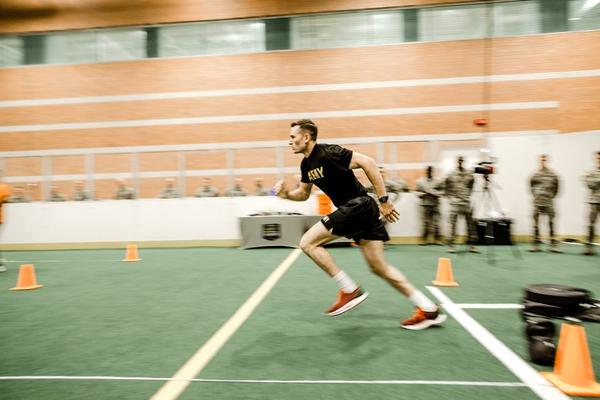
Good sprinting is not about forcing longer strides or moving your legs as fast as possible. Efficient speed comes from coordinated positions: the body rises naturally out of acceleration, the hips stay tall at higher speeds, the arms counterbalance the legs, and the feet strike quickly beneath the body. Sprinting form drills give you a low-pressure way to practise those positions before adding full speed.
The most useful drills are simple enough to repeat consistently and specific enough to improve a clear part of sprint mechanics. Think of them as rehearsals. They should sharpen posture, rhythm, front-side mechanics, and ground contact without leaving you exhausted before the actual sprint work begins.
Start With Posture Before Chasing Speed
Sprint posture changes through a run. During early acceleration, the whole body has a forward angle as you push away from the ground. As speed builds, that angle gradually becomes more upright. The mistake is trying to stay bent at the waist or, at the other extreme, standing tall too soon.
A useful cue is to keep the head, torso, and pelvis aligned rather than folding at the hips. At near-top speed, aim for a tall position with the hips up and the face, jaw, and shoulders relaxed. Good running form drills should reinforce this alignment rather than encourage exaggerated movements that disappear as soon as you sprint.
Wall March
Stand facing a wall and place both hands against it. Walk your feet back until your body forms a straight line from head to heel. Drive one knee forward while keeping the supporting leg long and the ankle firm, then switch slowly. The goal is not speed. It is learning what a strong acceleration line feels like.
Do two or three short sets of controlled repetitions. If your hips sag, your lower back arches, or your foot reaches far behind you, reset the position. Once the posture is stable, you can progress to quicker alternating switches.
Falling Start
Stand tall, lean forward from the ankles, and allow your body to fall as one unit. When you must step to avoid falling, push into a short acceleration of about 10 to 20 metres. This helps connect forward body angle with purposeful projection rather than bending at the waist.
Use Marching and Skipping to Organise the Front Side
Many sprinting form drills are built around marching because slowing the action down makes coordination easier to feel. A-marches and A-skips can help athletes practise lifting the thigh, keeping the pelvis controlled, and bringing the foot back toward the ground without reaching forward.
A-March
Move forward slowly with a tall torso. Lift one thigh until it is roughly parallel to the ground or slightly below, keep the ankle dorsiflexed, then bring the foot down beneath the hip. Coordinate the opposite arm with the raised leg. The movement should feel crisp, not theatrical.
A common error is chasing an excessively high knee. Knee lift is a result of the sprint cycle, not a contest. Keep the movement comfortable enough that the pelvis stays level and the next ground contact remains close to the body.
A-Skip
The A-skip adds rhythm and a small bounce to the same pattern. Focus on timing: thigh up, foot prepared, then a quick strike down under the body. Keep the upper body quiet while the arms move naturally from the shoulders.
If coordination breaks down, return to marching. A slower drill performed well is more useful than a faster drill performed with poor positions.
Improve Foot Placement and Ground Contact
At high speed, effective sprint mechanics depend on producing force rapidly during short ground contacts. That does not mean deliberately pawing at the track or forcing a particular foot-strike label. A better priority is to arrive with the foot close to beneath the body, the ankle prepared, and the leg moving back toward the ground.
Dribbles
Dribbles use small, cyclical steps that gradually become larger. Begin with the feet cycling low around the ankles, then progress toward calf height and eventually knee height while maintaining tall sprint posture. Keep the contacts light and quick.
This drill is useful because it teaches the leg to cycle without excessive backside swing. It also encourages rhythm before faster running. Perform it over 10 to 20 metres and stop if the movement becomes noisy, forced, or overly bouncy.
Straight-Leg Runs
With the knees only slightly bent, move forward using quick contacts and active hip movement. Think about stepping down beneath you rather than reaching out in front. The drill can improve stiffness and timing, but it should remain controlled. Start with short distances and moderate intensity.
Clean Up Arm Action Without Making It Robotic
Arm action helps balance the rotational forces created by the legs. The arms should swing primarily forward and backward from the shoulders, with the hands passing roughly from the hip area toward the front of the body. Exact angles vary between athletes, so avoid trying to freeze the elbows at one perfect number.
Seated Arm Drill
Sit tall on the ground with the legs extended. Pump the arms as if sprinting while keeping the shoulders relaxed and the torso stable. If your hands sweep dramatically across the midline or your shoulders rise toward your ears, reduce the effort and clean up the path.
Try two 10-second repetitions, then stand and run a relaxed build-up. The useful test is whether the improved arm rhythm transfers into actual sprinting.
Turn Drills Into Faster Running
Drills have limited value if they never connect to real sprinting. After two or three technique exercises, perform short accelerations or progressive runs while using only one cue. For example, an athlete who overreaches might use “step down under the hips,” while someone who collapses through the torso might use “hips tall.”
A practical session could begin with a general warm-up, then include two sets of wall marches, two 15-metre A-marches, two 15-metre dribbles, and three relaxed 30-metre build-ups. After that, move into the main sprint session. Keeping the drill block brief prevents technique practice from becoming fatigue practice.
Video can help, too. Record one or two sprints from the side and compare what happens at speed with what you practised in drills. Look for one obvious pattern rather than trying to fix everything at once. The best cue is usually the one that changes the movement without making the athlete tense.
How Often Should You Practise Sprinting Form Drills?
For most athletes, a few drills during the warm-up on sprint days are enough. Quality matters more than volume. Choose drills that address your current need, perform them while fresh, and progress from controlled movements to faster running.
A simple rotation works well: use acceleration-focused drills on one day and upright mechanics or rhythm drills on another. As technique improves, reduce the number of drills and spend more time sprinting. Drills support speed development; they do not replace it.
Frequently Asked Questions
What are the best sprinting form drills for beginners?
Wall marches, A-marches, A-skips, dribbles, and short falling starts are good starting points because they teach posture, coordination, and foot placement at manageable speeds. Begin with one or two drills and master them before adding more.
Should I try to land on my toes when sprinting?
No. Do not force a toe-first landing. At faster speeds, focus instead on keeping the ankle prepared and placing the foot close to beneath the body. Artificially reaching for a specific foot strike can create tension or overstriding.
Can sprint drills make me faster by themselves?
Drills can improve coordination and reinforce useful positions, but speed also depends on sprint practice, strength, power, recovery, and individual mechanics. The best approach is to use drills as preparation for high-quality sprinting rather than treating them as the entire speed programme.
How long should a sprint drill session last?
Technique work does not need to be lengthy. Ten to fifteen focused minutes within a warm-up is often enough, especially when followed by accelerations or faster runs that let you apply the same cues.
Build Better Mechanics One Cue at a Time
Sprinting form improves fastest when each drill has a job. Use wall work for acceleration alignment, marching and skipping for coordination, dribbles for rhythm, straight-leg runs for active ground contact, and simple arm drills when the upper body is wasting motion. Then test the change in real sprinting.
Stay relaxed, keep the drill volume modest, and judge success by what carries over at speed. Efficient sprinting rarely comes from forcing bigger movements. It comes from repeating better positions until posture, arm action, timing, and ground contact work together with less wasted motion.