
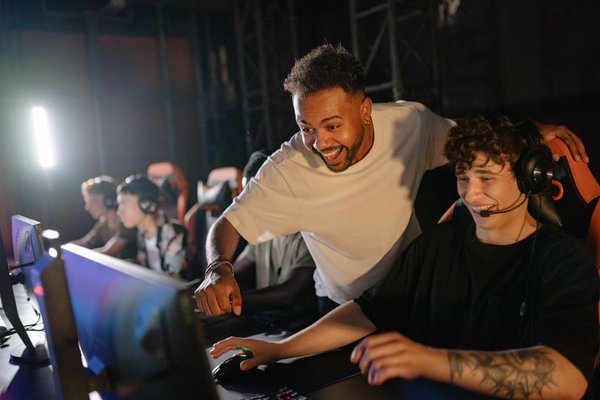
A talented esports roster can still lose to a less mechanically gifted team. The difference is often what happens between matches: how players practise, interpret mistakes, agree on decisions, and respond under pressure. Esports coaching turns those scattered efforts into a repeatable process. Coaches do more than tell players to aim better or play more games. They help individuals operate as one team while building habits that survive difficult matches.
What Does an Esports Coach Actually Do?
The esports coach role combines tactical planning, teaching, observation, and leadership. Responsibilities depend on the game and competitive level. A professional roster might employ a head coach, assistants, and analysts, while a school or amateur team may rely on one gaming coach for everything.
Coaches study opponents, plan practice, review recorded games, give individual feedback, and help resolve disagreements. They also identify what the team should improve next rather than treating every defeat as a reason to overhaul its strategy.
Build a shared game plan
Team strategy in esports involves positioning, timing, resources, and risk. In VALORANT or Counter-Strike 2, that might mean deciding when to contest map space or save equipment. In League of Legends, it could mean trading an objective instead of forcing a fight. A coach prepares options and explains the reasoning behind each one.
Plans need room for adaptation. If opponents counter a familiar opening, players should recognise the signals that trigger an alternative.
Design useful practice
Simply adding ranked matches does not guarantee improvement. Effective esports training gives each session a purpose. One scrim might test early-round communication; another might rehearse defending a site or recovering from a lost objective.
Coaches separate practice goals from results. A team can lose a scrim yet execute its new communication routine correctly. Equally, winning with repeated positioning errors does not make the session successful.
Turn replays into feedback
During video-on-demand review, or VOD review, coaches pause key moments and ask what information players had at the time. A decision that looks foolish with full replay vision may have been reasonable from a player’s limited perspective.
Good analysis finds patterns across matches: late rotations, overlapping responsibilities, wasted utility, or inconsistent target selection. The aim is a fix players can rehearse, not a long catalogue of mistakes.
How a Coaching Session Works in Practice
Imagine a VALORANT team that repeatedly loses defensive retakes. Instead of ordering everyone to communicate more, the coach selects three recent rounds and traces when teammates became separated. Replays show that one player enters before the others can use their abilities.
The next scrim has a narrow objective: one player calls the entry timing, another confirms utility is ready, and the group commits together. Afterward, the coach reviews only those retakes, checking whether the sequence happened and the information arrived early enough.
This is the value of targeted drills: they turn a vague complaint into observable behaviour. The related skill of reviewing esports gameplay footage helps players choose useful clips and take notes without overwhelming the team.
Coaching Communication, Not Just Mechanics
Communication problems rarely mean players are too quiet. A roster can talk constantly and still miss essential information. A coach helps define which calls are urgent, who makes the final decision, and when others should listen.
Clear calls contain facts. “Two pushing mid; I’m falling back” gives teammates something to act on. “They’re everywhere!” does not. Reviewing voice recordings alongside gameplay can expose clutter, delayed information, and conflicting instructions.
Conflict management matters, too. After a close loss, teammates may blame each other. A coach guides discussion toward the decision process: what the call was, what each player understood, and what the team will change. That protects trust without avoiding accountability.
Individual Player Development Within a Team
Esports coaching involves player development, but improvement is not just a ranking or kill statistic. Depending on the role, progress might mean better map awareness, utility timing, resource management, or calmer decisions.
A coach can create a brief development plan with one priority, a practice method, and a review date. For example, a support player might focus on communicating cooldown availability before objective fights. The coach checks whether teammates received that information in time to use it.
Players respond differently to feedback. Some need a quick clip and direct instruction; others improve by explaining their options. A good gaming coach stays specific without making every mistake feel personal.
Rest matters. Long sessions can produce fatigue, so coaches should monitor practice quality, encourage breaks, and avoid treating endless grinding as commitment. Persistent pain or health concerns call for qualified professional advice.
From Practice Room to Match Day
Before competition, coaches prepare opponent tendencies, possible strategies, and a manageable number of priorities. Tournament rules may limit coaching during live play, so preparation must equip players to decide independently.
After a match, productive reviews start with recurring decisions, not a verdict on who played badly. Comparing intended strategy with actual execution reveals whether the problem was preparation, communication, or adaptation.
Two useful areas for further practice are esports practice schedules and team communication drills. Both help turn coaching feedback into regular habits.
How Can a Team Tell Whether Coaching Is Working?
Match wins matter, but opponent strength, game patches, roster changes, and small samples all affect results. Better indicators include whether players make agreed calls, execute set plays consistently, recognise tactical cues sooner, and avoid preventable errors.
Review progress across sessions using footage and player feedback. If a drill improves coordination without an immediate win-rate increase, it may still be useful. If players cannot explain the plan, the coach may need to simplify it.
Frequently Asked Questions About Esports Coaching
Do amateur esports teams need a coach?
Not necessarily, but even a volunteer coach or organised team leader can help. A shared practice goal and short replay review offer more direction than matches without reflection.
Is an esports coach different from an analyst?
Usually. Analysts concentrate on gathering and interpreting gameplay information, while coaches use it to teach, plan, and manage the team. One person may fill both roles.
Can esports coaching improve an individual player’s rank?
It can help address decision-making habits and create better practice, but rank increases are not guaranteed. Solo-queue outcomes depend on many factors.
How often should a team review its matches?
There is no universal schedule. Brief reviews after selected scrims and deeper reviews of recurring problems are useful. The aim is actionable learning, not watching every minute.
The Value of a Clear Coaching Process
The strongest esports coaching makes improvement visible. Coaches connect tactical choices to focused practice, turn replay findings into precise feedback, and help teammates communicate under pressure. Teams develop a reliable cycle: prepare, play, examine, adjust, and try again. That gives talented players a better chance to perform together when the match matters.