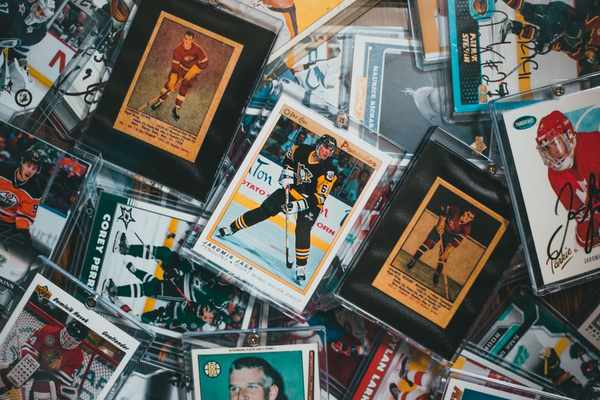
Baseball card collecting looks simple from the outside: pick a player, buy a card, put it somewhere safe. Once you enter the hobby, though, you quickly meet base cards, parallels, inserts, rookie logos, serial numbers, autographs, grading labels, and prices that can vary sharply for cards that look almost identical. The easiest way to start is not to learn every product at once. It is to understand what makes one card different from another, buy a few singles you genuinely like, and protect them properly from day one.
Baseball card collecting for beginners is less about chasing the hottest box and more about building buying judgment. Set popularity, scarcity, condition, grading, and collector demand all influence value.
Learn the Main Types of Baseball Cards First
Most modern releases have a base set that forms the core checklist. Base cards are usually the most common version of each player and are often the cheapest place to begin.
Parallels use the same basic design but change an element such as colour, foil, pattern, or finish. Some are serial-numbered, meaning the manufacturer states how many copies were produced. A card numbered to 99 is scarcer than the regular base version, but scarcity alone does not guarantee strong value. Player demand still matters.
Inserts come from themed subsets. Autograph and memorabilia cards add signatures or pieces of material, depending on the release. Read the product wording carefully rather than assuming every relic is game-used.
Why Rookie Cards Get So Much Attention
Rookie cards are central to many baseball collections because collectors often want an early major-league card of a player who may become a star. On modern licensed cards, an RC or rookie designation is a useful cue, but prospect cards, pre-rookie issues, inserts, parallels, and traditional rookie cards can all exist for the same player.
Rookie card value is usually shaped by player performance, career expectations, the popularity of the set, scarcity, condition, and collector preference. A common rookie of a superstar can be more desirable than a much scarcer card of a player with little following.
For a first purchase, choose one player and compare three versions from the same season: a base rookie, one parallel, and one graded copy. That small exercise teaches you what collectors are actually paying extra for.
PSA Grading Explained Without the Jargon
Third-party grading companies authenticate cards, evaluate condition, assign a grade, and encapsulate accepted cards in protective holders. PSA uses a 1-to-10 scale, with 10 as the highest grade. A PSA 10 is Gem Mint, PSA 9 is Mint, and PSA 8 is Near Mint-Mint.
Grading is not simply about whether a card looks clean at arm’s length. Graders examine corners, edges, surface condition, print quality, centering, stains, creases, and signs of alteration. PSA’s published standards describe a Gem Mint 10 as virtually perfect and include centering tolerances, while also allowing overall eye appeal to matter in borderline cases.
One useful lesson in PSA grading explained for beginners is that a high grade should never be assumed. A card that looks flawless may have a faint print line, corner touch, surface scratch, or centering issue under stronger light. Grading costs money, and service prices or availability can change, so submitting every inexpensive card rarely makes sense.
When Grading Can Make Sense
Consider grading when authentication matters, when the card is valuable enough that a recognised grade may improve buyer confidence, or when the expected difference between raw and graded value justifies the cost. Before submitting, compare recent sales of the same card raw and in several PSA grades, then check the grader’s current service rules.
How to Avoid Overpaying on Your First Buys
The asking price is not the market price. Sellers can list a card for any amount, so look at completed or sold transactions for the same card, parallel, serial-number range, and grade. Compare several sales because one unusually high or low result can mislead you.
Suppose a rookie card is listed for $120, while comparable copies in the same grade have recently sold around $75 to $85. The $120 listing does not prove the card is worth $120; it shows what one seller hopes to receive. Setting a maximum price before making an offer keeps excitement from becoming an expensive lesson.
Buying singles is often the most controlled way to begin. Sealed boxes can be fun, but the contents are uncertain. If you want cards of a particular player, a singles budget lets you choose exactly what you want instead of paying for a chance to pull it.
Card Storage Supplies Worth Buying Immediately
Good card storage supplies are inexpensive compared with replacing a damaged card. For standard raw cards, a soft sleeve followed by a rigid top loader is a practical combination. Semi-rigid holders are also common, including for many grading submissions. Trading-card boxes keep protected cards upright and organised, while quality binder pages can work well for lower-value set building.
Keep cards away from direct sunlight, excessive heat, moisture, and large swings in humidity. Do not force thick cards into standard holders; use a holder sized for the card’s thickness. Handle raw cards by the edges and avoid touching glossy surfaces more than necessary.
Give Your Collection a Clear Theme
A collection becomes easier to manage when it has a purpose. You might collect one team, one player, Hall of Famers, a favourite set, rookie cards, vintage designs, or cards tied to ballparks you have visited. A theme also reduces impulse purchases.
Keep a simple record of what you paid, the card number, parallel name, serial number if applicable, and grade. This also gives you natural next steps for learning about a baseball card set checklist, sports memorabilia collecting, or the history of iconic baseball cards.
Frequently Asked Questions
How much money do I need to start collecting baseball cards?
You can start with a modest budget. Even $25 to $100 can buy several enjoyable singles, basic protection, and possibly one inexpensive graded card. A fixed monthly hobby budget is more useful than trying to match experienced collectors.
Are all rookie cards valuable?
No. Rookie cards are popular, but value depends on the player, set, scarcity, condition, grade, and collector demand. Many remain inexpensive.
Should I grade every rookie card I pull?
Usually not. Compare raw and graded sale prices and factor in grading fees, shipping, turnaround time, and the chance of receiving a lower grade than expected.
What is the safest way to store raw baseball cards?
For many standard cards, place the card in a soft sleeve before putting it into a correctly sized top loader or other protective holder. Store it upright away from sunlight, heat, and moisture.
Build Judgment Before You Chase Bigger Buys
The best early purchases teach you how the hobby works while still being enjoyable to own. Learn the difference between base cards and parallels, understand why rookie status matters, compare actual sold prices, and treat grading as a tool rather than a guarantee of profit. With a small buying plan and proper storage, you can build a collection that feels personal instead of random and make better choices as your interests expand.